Introduction
When choosing a modern ceiling for a home, office, hotel, restaurant, showroom, or other interior space, there are many design options available today. Understanding the different types of stretch ceilings can help property owners, architects, and interior designers select a ceiling that matches the purpose, lighting requirements, atmosphere, and overall style of a space. Unlike conventional painted ceilings, stretch ceiling systems can be designed with different finishes, colours, lighting effects, patterns, and visual effects. Options can include matte, glossy, translucent, printed, acoustic, illuminated, and designer ceilings. Each type offers different aesthetic and functional possibilities. Delight Stretch Ceiling provides stretch ceiling solutions for different interior applications, helping customers choose a suitable design based on their space, design preferences, and project requirements.
What Is a Stretch Ceiling?
A stretch ceiling is a modern ceiling system made using a flexible membrane that is installed across a room and secured to specially designed profiles around the perimeter. Once properly installed, the membrane creates a smooth and continuous ceiling surface. Depending on the selected material and finish, the ceiling can have a completely matte appearance, a reflective glossy surface, a translucent appearance, or a customised printed design.One of the main advantages of stretch ceiling systems is design flexibility. The ceiling does not have to be limited to a traditional flat white surface. It can incorporate lighting, different colours, printed graphics, curves, shapes, and other architectural elements. This makes stretch ceilings suitable for both residential and commercial interiors where the ceiling forms an important part of the overall design.
Why Are There Different Types of Stretch Ceilings?
Not every room requires the same ceiling finish. A bedroom may need a calm and understated appearance, while a retail showroom may benefit from a reflective or illuminated ceiling. Similarly, an office may require acoustic considerations, while a restaurant might prioritise atmosphere and visual impact.The different types of stretch ceilings allow designers to select a solution according to:Interior styleLighting requirementsRoom sizeDesired visual effectColour schemeAcoustic requirementsBranding requirementsMaintenance considerationsResidential or commercial applicationOverall design conceptInstead of treating the ceiling as a simple finishing surface, modern stretch ceiling systems allow it to become an active part of the interior design.
1. Matte Stretch Ceiling
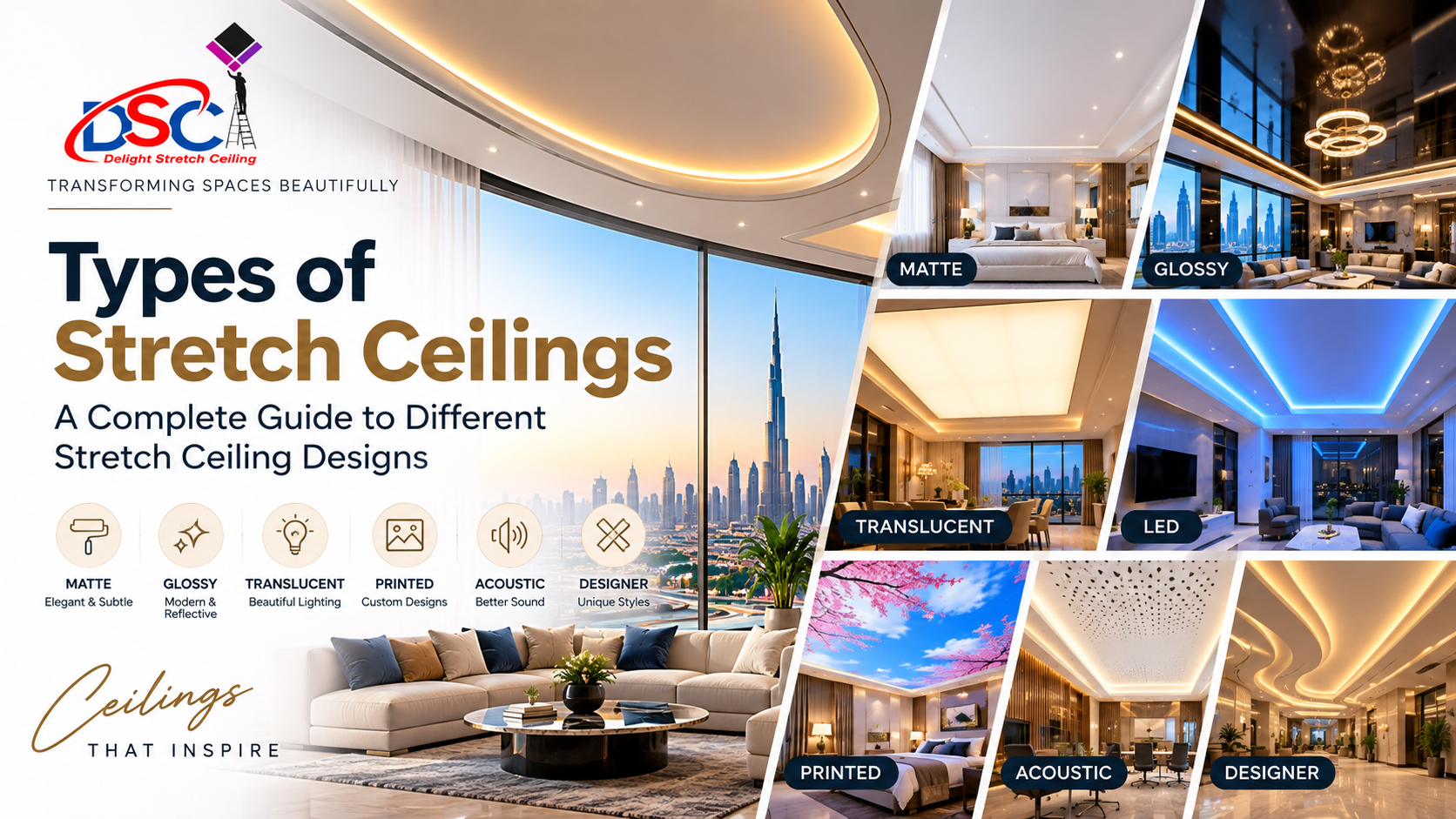
A matte stretch ceiling provides a soft, non-reflective appearance that resembles a traditionally painted ceiling while offering the smooth and seamless appearance associated with stretch ceiling systems.This type is suitable for spaces where the goal is understated elegance rather than a dramatic reflective effect. Because the surface does not create strong reflections, it can work particularly well in bedrooms, living rooms, offices, meeting rooms, restaurants, and other interiors where a calm visual atmosphere is preferred.Matte finishes are also versatile because they can be incorporated into many different interior styles. They can complement contemporary, minimalist, classic, or luxury interiors without dominating the rest of the design.For homeowners and designers who want a clean ceiling without excessive visual reflection, a matte finish can be an appropriate option.
2. Glossy Stretch Ceiling
Glossy stretch ceilings have a highly reflective surface that can create a distinctive visual effect within an interior.The reflective surface can make a room appear visually more open and can reflect architectural elements, furniture, decorative lighting, and other parts of the interior. This makes glossy ceilings particularly interesting for contemporary interiors, retail spaces, hospitality areas, showrooms, restaurants, and selected residential projects.However, a glossy ceiling should be selected according to the overall design of the room. Because the surface is reflective, the objects and lighting below it can become visually noticeable on the ceiling.For interiors where designers want the ceiling to contribute significantly to the visual character of the room, a glossy finish can provide a more dramatic appearance than a conventional matte ceiling.
3. Translucent Stretch Ceiling
Translucent stretch ceilings are designed to allow light to pass through the membrane. They are commonly combined with lighting installed above the ceiling surface.The result can be a softly illuminated ceiling that creates a uniform visual effect across the room. Instead of seeing individual light fixtures, the ceiling itself can become the visible source of diffused illumination.This makes translucent ceilings particularly useful for:HotelsRestaurantsLuxury homesReception areasRetail spacesOfficesShowroomsFeature areasThe lighting system behind the membrane should be planned carefully so that the illumination appears consistent. The positioning, spacing, intensity, and colour temperature of the lighting can all influence the final appearance.
4. LED Stretch Ceiling
LED stretch ceilings combine stretch ceiling membranes with integrated or concealed LED lighting.Rather than treating lighting and the ceiling as two separate design elements, this approach allows them to work together as one system. Depending on the design, lighting can be placed around the perimeter, behind translucent sections, within decorative shapes, or in selected ceiling areas.LED lighting can be used to create:Backlit ceiling effectsDecorative linesGeometric patternsSoft ambient lightingFeature ceiling sectionsIlluminated shapesContemporary architectural effectsLED stretch ceilings can be especially effective in modern offices, restaurants, hotels, retail interiors, entertainment areas, and luxury residences.
5. Printed Stretch Ceiling
Printed stretch ceilings allow images, patterns, artwork, graphics, or custom designs to become part of the ceiling surface.This option provides considerable creative freedom because the ceiling can be customised according to the interior concept. A designer might choose an abstract pattern, geometric design, nature-inspired image, branding element, or another visual concept.Printed ceilings can be considered for:Children's roomsRestaurantsHotelsRetail storesShowroomsEntertainment spacesFeature areasCommercial brandingThe quality of the final result depends on the design resolution, printing process, membrane, installation quality, and lighting conditions.For businesses, a printed ceiling can also become part of the overall visual identity of a space.
6. Acoustic Stretch Ceiling
Acoustic stretch ceilings are designed for spaces where sound management is an important consideration.Large open interiors can sometimes experience excessive reverberation because sound reflects from hard surfaces such as walls, floors, and ceilings. Depending on the system, acoustic stretch ceiling solutions can be combined with acoustic materials installed behind or above the membrane to help manage sound within the room.They can be considered for:Conference roomsOfficesRestaurantsAuditoriumsHome cinemasHospitality spacesMeeting roomsEntertainment areasThe acoustic performance depends on the complete ceiling assembly rather than the visible membrane alone. Therefore, acoustic requirements should be discussed with the installer or acoustic professional during the design stage.
7. 3D and Designer Stretch Ceilings
Designer stretch ceilings can use different levels, shapes, curves, lighting arrangements, colours, and membrane finishes to create a distinctive architectural ceiling.
A 3D-style ceiling does not necessarily mean a single standard product. Instead, the appearance can be created through the combination of ceiling profiles, shapes, lighting, colours, and different membrane sections.
This makes designer ceilings suitable for projects where the ceiling is intended to become a major visual feature.
They can be used in:
Luxury residences
Hotel lobbies
Restaurants
Retail spaces
Showrooms
Entertainment areas
Reception spaces
The final design should be planned together with the interior architecture so that the ceiling complements rather than overwhelms the room.
8. Coloured Stretch Ceilings
Stretch ceilings are not restricted to traditional white finishes. Different colours can be selected to complement the interior palette.A coloured ceiling can either blend into the surrounding design or create contrast with walls, flooring, furniture, and lighting.For example, neutral colours can create a subtle appearance, while darker colours may provide a more dramatic atmosphere. Soft colours can be useful in residential spaces, while stronger colours can be considered for commercial environments where branding or visual identity is important.Colour selection should take into account the size of the room, natural light, artificial lighting, furniture, wall finishes, and the overall interior concept.
How to Choose the Right Type of Stretch Ceiling
Choosing between the different types of stretch ceilings should begin with the purpose of the room rather than simply selecting the most visually attractive finish.
Consider the following:
1. Room FunctionThink about whether the ceiling is being installed in a bedroom, living room, office, restaurant, hotel, showroom, or another environment.
2. LightingDecide whether you need normal ceiling lighting, concealed lighting, decorative lighting, or a fully illuminated ceiling.
3. Interior StyleConsider whether the room is minimalist, contemporary, luxurious, traditional, industrial, or artistic.
4. Desired FinishChoose between matte, glossy, translucent, printed, coloured, or other available finishes.
5. MaintenanceConsider accessibility, cleaning requirements, lighting components, and the long-term maintenance approach.
6. Ceiling HeightThe available ceiling height and existing services can influence the design and installation method.
Stretch Ceilings for Homes
Stretch ceilings can be used in different areas of residential properties.
In living rooms, homeowners may choose matte, glossy, coloured, or illuminated finishes depending on the interior style. Bedrooms may benefit from softer colours and subtle lighting, while entertainment rooms can use more creative designs.
They can also be considered for:
Villas
Apartments
Bedrooms
Living rooms
Dining rooms
Home cinemas
Walk-in wardrobes
Bathrooms
Private gyms
The important consideration is that the ceiling should complement the architecture and furniture rather than being selected independently.
Stretch Ceilings for Commercial Spaces
Commercial interiors often require ceilings that contribute to both aesthetics and functionality.Hotels, restaurants, offices, retail stores, showrooms, clinics, gyms, and reception areas can all have different requirements.For example, a restaurant may use an illuminated or designer ceiling to create atmosphere, while an office may place greater emphasis on lighting and acoustic considerations.Retail and showroom environments may use glossy, printed, coloured, or illuminated designs to support the visual identity of the business.The correct choice depends on the purpose of the space, expected visitor experience, lighting requirements, and overall architectural concept.
Why Professional Installation Matters
Even a high-quality ceiling material can produce poor results if the installation is not carried out correctly.
Professional installation generally involves:
Site measurement
Design planning
Profile installation
Membrane preparation
Lighting coordination
Membrane installation
Finishing
Final inspection
The installation process should also consider existing electrical systems, air-conditioning, sprinklers, access points, and other ceiling services.
For a project involving multiple ceiling levels, lighting systems, printed designs, or unusual shapes, coordination between the ceiling installer, interior designer, electrician, and other contractors can be particularly important.
Maintenance of Stretch Ceilings
One of the practical considerations when selecting a stretch ceiling is long-term maintenance.The appropriate cleaning method depends on the membrane and finish. In general, the surface should be maintained using suitable cleaning methods and materials recommended for the specific ceiling system.Avoid using harsh chemicals or abrasive materials unless they are specifically approved for the membrane.Lighting systems should also be inspected separately where required, particularly when the ceiling incorporates concealed LED systems.Proper installation and appropriate maintenance can help preserve the appearance of the ceiling over time.
Stretch Ceiling Design in Dubai
Dubai interiors often combine contemporary architecture, decorative lighting, luxury materials, and customised interior concepts. This makes stretch ceilings suitable for a wide range of residential and commercial projects.The different types of stretch ceilings can be adapted to villas, apartments, hotels, restaurants, offices, retail spaces, showrooms, and other interiors.For a Dubai project, the ceiling design should be considered alongside the complete interior rather than selected as an isolated feature.Delight Stretch Ceiling works with customers to understand the space, design requirements, preferred finish, lighting concept, and application before recommending a suitable ceiling solution.You can learn more about the company through the About Us page.
How Much Does a Stretch Ceiling Cost?
The cost of a stretch ceiling can vary significantly from one project to another.
Factors that can influence the overall cost include:
Ceiling area
Selected membrane
FinishCeiling
design
Lighting requirements
Installation complexity
Ceiling height
Existing services
Number of levels
Custom printing
Project location
For this reason, it is better to request a project-specific quotation rather than relying only on a general price estimate.
You can also read our detailed guide on stretch ceiling price in Dubai to understand the major factors that influence project costs.
How to Select a Stretch Ceiling Company
Before selecting an installer, consider several practical factors rather than focusing only on the quoted price.
Look at:
Previous project experience
Quality of installation
Range of ceiling options
Design support
Lighting coordination
Project communication
Warranty information
Maintenance support
Customer reviews
Ability to handle your specific project type
It can also be useful to review completed projects and discuss your requirements directly with the installation team.For Delight Stretch Ceiling, customers can explore project updates and visual content through the company's Facebook page.
Frequently Asked Questions
1. What are the main types of stretch ceilings?
The main types of stretch ceilings can include matte, glossy, translucent, illuminated, printed, acoustic, coloured, and designer stretch ceilings. Each option provides different visual and functional possibilities. Matte ceilings offer a subtle appearance, while glossy finishes create reflections. Translucent and illuminated systems can integrate lighting into the ceiling itself. Printed ceilings allow customised graphics or patterns, while acoustic systems can be considered when sound management is important. The right option depends on the room, design concept, lighting requirements, and project objectives. A professional installer can help determine which ceiling type is appropriate after understanding the space and the desired final appearance.
2. Which type of stretch ceiling is best for a living room?
There is no single option that is suitable for every living room. Among the different types of stretch ceilings, matte finishes can provide a clean and understated appearance, while glossy ceilings can create a more reflective and contemporary effect. Illuminated ceilings can be considered when lighting is an important part of the interior design. Colour and ceiling height should also be considered before making a selection. The furniture, flooring, wall colour, natural light, and existing lighting should work together with the ceiling. A designer or installer can recommend a suitable finish based on the size and style of the living room.
3. Are stretch ceilings suitable for commercial spaces?
Yes, different types of stretch ceilings can be used in many commercial environments, including offices, hotels, restaurants, retail stores, showrooms, reception areas, and other interiors. The appropriate option depends on the requirements of the space. For example, a restaurant may prioritise atmosphere and decorative lighting, while an office may consider lighting and acoustic requirements. Retail environments may use printed, coloured, glossy, or illuminated designs to complement their visual identity. Before installation, the ceiling design should be coordinated with electrical systems, air-conditioning, fire-safety equipment, and other building services to ensure that the finished ceiling works properly within the complete commercial interior.
4. Can stretch ceilings include LED lighting?
Yes. Some types of stretch ceilings can be combined with LED lighting to create illuminated architectural effects. Depending on the design, LEDs can be installed behind translucent sections, around ceiling details, or within selected decorative areas. The lighting layout should be planned before installation because the position and spacing of lighting components can influence the final appearance. Designers may use LED systems to create ambient lighting, illuminated shapes, lines, or larger backlit ceiling surfaces. The appropriate lighting system depends on the ceiling design, room requirements, electrical planning, and desired illumination level. Professional coordination is recommended when lighting and ceiling installation are being completed together.
5. Can stretch ceilings be customised?
Yes, customisation is one of the major advantages of different types of stretch ceilings. Depending on the system selected, a ceiling can be customised through colour, finish, lighting, printed graphics, shapes, levels, and other design elements. Printed ceilings can incorporate selected artwork or patterns, while designer systems can combine different finishes and lighting arrangements. Customisation should be planned according to the architecture of the room rather than added as an independent feature. Factors such as room dimensions, furniture, lighting, ceiling height, and interior colour should all be considered. A professional design consultation can help determine which customisation options are practical for the project.
6. Are matte or glossy stretch ceilings better?
Both matte and glossy finishes have different visual characteristics, so the appropriate choice depends on the project. Matte is one of the types of stretch ceilings that provides a softer, non-reflective appearance, making it suitable for understated interiors. Glossy finishes are more reflective and can create a distinctive contemporary appearance. The decision should consider room size, lighting, furniture, wall finishes, and the overall interior concept. A highly reflective surface may behave differently from a matte surface under strong lighting. Instead of choosing a finish based only on appearance, homeowners and designers should consider how the ceiling will interact with the complete room.
7. Can stretch ceilings be used in luxury interiors?
Yes. Different types of stretch ceilings can be incorporated into luxury residential and commercial interiors. Designers can combine finishes, colours, lighting, levels, and customised elements to create a ceiling that complements the architectural concept. Luxury villas, hotel lobbies, restaurants, showrooms, reception areas, and entertainment spaces can all use customised ceiling designs. The final result depends heavily on design planning and installation quality. A ceiling should complement other interior elements such as flooring, walls, furniture, decorative lighting, and architectural features. Selecting the appropriate membrane and finish is therefore only one part of creating a successful luxury ceiling design.
8. How do I choose between different stretch ceiling designs?
Start by identifying what you want the ceiling to achieve. The different types of stretch ceilings serve different design and functional purposes. If you want a subtle appearance, a matte finish may be appropriate. If you want reflection, consider a glossy finish. If integrated illumination is important, translucent or illuminated options may be considered. Printed ceilings provide opportunities for custom graphics, while acoustic solutions can be useful when sound management is required. You should also consider room size, ceiling height, lighting, furniture, maintenance, budget, and installation complexity. Discussing these factors with an experienced installer can help narrow down suitable options for your project.
9. Are stretch ceilings suitable for villas in Dubai?
Yes, different types of stretch ceilings can be used in villas and other residential properties in Dubai. The choice depends on the room and the desired interior style. Living rooms may use matte, glossy, coloured, or illuminated designs, while bedrooms can use softer finishes and lighting. Home cinemas, private gyms, dining areas, and entertainment rooms can also use more customised ceiling concepts. Before selecting a design, the installer should consider the existing ceiling, electrical services, lighting, air-conditioning, room dimensions, and overall interior architecture. A site assessment can help determine which ceiling system and installation approach are suitable for the specific villa.
10. How long does a stretch ceiling last?
The lifespan of a stretch ceiling depends on the membrane, installation quality, environmental conditions, usage, and maintenance. The different types of stretch ceilings may have different material characteristics and maintenance requirements. A properly installed ceiling can provide a long-lasting interior finish, but exact lifespan should not be assumed without considering the specific product and installation system. Customers should ask the installer about the membrane specifications, warranty, maintenance recommendations, and expected service life before starting a project. Regular care and appropriate cleaning can also help preserve the appearance of the ceiling. Professional installation is an important part of achieving a durable finished result.
Conclusion
Understanding the different types of stretch ceilings makes it easier to select a ceiling that suits the architecture, lighting, purpose, and atmosphere of a space. From understated matte finishes and reflective glossy surfaces to translucent illuminated ceilings, printed designs, acoustic solutions, and customised designer systems, stretch ceilings offer a wide range of possibilities.
The best choice depends on the individual project rather than simply selecting the most visually impressive option. Room function, ceiling height, lighting, interior design, maintenance, installation requirements, and budget should all be considered before making a decision.
Delight Stretch Ceiling can help homeowners, architects, designers, and businesses explore suitable stretch ceiling solutions for their projects.